
More sustainability in the lab: Green Lab news & trends
analytica makes the laboratory world greener. Learn how you can increase sustainability in your laboratory and reduce your ecological footprint with energy-efficient equipment, intelligent laboratory concepts, and bio-based chemicals at the World's Leading Trade Fair in Munich, Germany, from March 24-27, 2026.

Lab goes green: how sustainability works in the lab
Energy-intensive equipment and indoor air concepts, as well as high consumption of chemicals, gases, and water, make this industry one of the most energy-intensive of all. Laboratories in the chemical, life science, pharmaceutical, and materials industries are therefore not only harmful to the environment, but also extremely costly to operate.

Sustainability program at analytica 2026
There will be plenty of presentations on the topic of sustainability in the laboratory at analytica 2026 in the forums and at the analytica conference. For example, the session on Wednesday, March 25, 10:00 - 13:00, B1.131: “Sustainability in the Laboratory – Insights, Trends & Best Practice” – Chair: Dr. Hermuth-Kleinschmidt.
Sustainability is becoming increasingly important in terms of climate impact and resource conservation. And when it comes to sustainability in the laboratory, there is still a lot of catching up to do. At analytica, visitors can see how sustainability works in the laboratory. Intelligent innovations, AI-supported laboratory automation, optimized laboratory processes, and novel device developments are making a decisive contribution to reducing high energy and chemical/material consumption, minimizing waste and thus costly disposal, and thereby protecting the environment in a sustainable manner.
Exhibitors from all over the world will be presenting state-of-the-art and sustainable analysis, bio, and laboratory technology at analytica. Be inspired to turn your laboratory into a Green Lab.
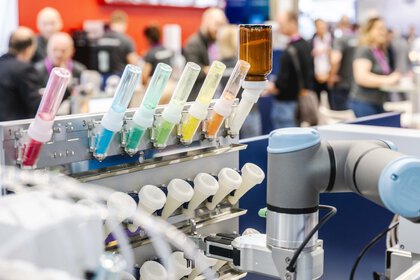
analytica podcast on sustainability in the lab (only in German)
This exciting analytica podcast episode on sustainability in the laboratory was produced in collaboration with the podcast “VIER NULL Industriefunk.” We were pleased to welcome expert Thomas Meier, Head of Microbiology at Hamburg Wasser, as our guest.

What exactly is it about?
Sustainable laboratory - the top topics at analytica
At analytica, laboratories will find a wealth of ideas for the sustainable laboratory. Look forward to exploring these top topics:
- Energy-efficient and bio-based Green Labs
- Miniaturization for less material use, less energy consumption, and less waste for greater sustainability
- Sustainable alternatives to toxic chemicals and valuable gases such as scarce helium
- Durable laboratory equipment made from resistant materials, maintenance and repair services, resource-saving laboratory analysis
- Green chemicals and environmentally friendly reagents, bio-based plastics
- Bioeconomy, circular economy, resource conservation, raw material transition, energy transition
- Miniaturization, automation, machine learning, digitalization
New products shaping the industry
analytica 2026 gives you the answers—compact, current, and hands-on. Experience innovative products and solutions—and take away fresh inspiration for your business.
Energy-efficient and bio-based: Green Labs protect the environment
Laboratories have significantly higher energy consumption than office and residential buildings. For example, a freezer that cools samples to minus 80 degrees consumes as much energy over the course of a year as a detached house. Considering that such energy-intensive analytical and laboratory equipment is connected in series in industrial laboratories, and that fume cupboards and ventilation systems are in constant operation, the figures quickly reach enormous proportions.
When purchasing new equipment, the focus should therefore be on energy consumption. analytica offers you the ideal platform to talk to manufacturers from all over the world about the energy efficiency of their equipment and its service life. You can also inquire about maintenance and repair concepts.
However, sustainability in the laboratory starts with the many small laboratory utensils. For example, some tubes and pipette tips made of fossil plastic can be replaced with tips made of bio-based plastics. Many other ideas for the sustainable laboratory can also be found at analytica.
The exhibitor Mettler Toledo has created a poster with tips for sustainable experimental design available for download.
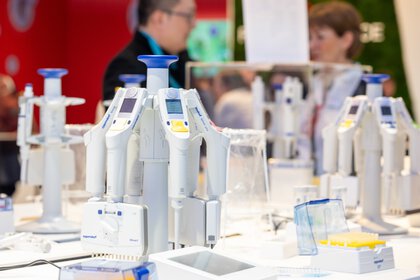
Smaller is better: less waste in the sustainable lab
Resource conservation: Disposable gloves, plastic tubes, pipette tips, and many other consumables—the amount of waste reflects laboratory operations. Added to this is a large amount of solid and liquid chemical waste. In recent years, there has been a shift in thinking, with a trend toward various savings models and miniaturization in device development. Analysis using miniaturized devices and samples in the microliter range significantly reduce the consumption of chemicals and reagents.
At analytica, find out how modern analysis technology reduces the consumption of valuable raw materials, leading to significant cost savings. And if toxic waste is produced, equipment for the appropriate treatment of solvents will be on display in Munich, from simple collection containers to automated collection and sorting systems for hazardous chemical waste.

Toxic chemicals and scarce helium: analytics needs sustainable alternatives
Many analytical and laboratory processes - whether in routine analysis, the life sciences or materials research - still rely heavily on solvents and reagents. Options should be explored for replacing substances that are damaging to the environment or health with less harmful chemicals. Talk to specialists at analytica and look at ways to make laboratory workflows more sustainable.
Alternatives to helium are also needed, because this inert gas is becoming scarce and ever more expensive. This is a real issue for analytical laboratories that require high-purity helium as a carrier gas for gas chromatography, among other things. Operating costs can be reduced by working with special gas filters, enabling lower-cost helium with a lower degree of purity to be used. Some systems already have helium-saving device settings or can be operated with alternative gases such as hydrogen.
Learn about the various options at analytica and find a sustainable solution today to a problem that is likely to get worse in the future.

Exhibitor at analytica 2026 on sustainability in the laboratory
Renowned exhibitors from all over the world will be presenting their concepts for greater sustainability in the laboratory at analytica in Munich.
analytica: meeting place for the Green Lab
analytica is the world's leading marketplace for products and services along the entire value chain of sustainable laboratory processes. Three reasons why analytica is your number one trade fair for sustainability:
- analytica showcases all aspects of the Green Lab. Learn about innovations and trends in one-to-one chats, and from talks and live demonstrations. Benefit from industry expertise gathered in one place.
- analytica brings you into conversation with key players, decision-makers and leading researchers. Over the three days of the analytica conference, for instance, renowned scientists from all over the world will be presenting their latest developments. Learn how to save resources with modern analytics. The conference will also highlight the importance of analytics in a sustainable economy.
- The practice-oriented supporting program at analytica gives you tips for your day-to-day laboratory work. Best practice examples and direct dialog are the focus of the analytica forums. Get inspiration for the green transformation and make your laboratory fit for the future.

Analytics news with a plus: analytica-world news
analytica-world news is the industry's leading newsletter. It keeps you up to date 365 days a year in the field of laboratory technology, diagnostics and biotechnology. You want to stay up-to-date? Then subscribe to our free weekly newsletter directly online.
FAQs about the Green Lab
A Green Lab takes into account the many aspects of sustainability in the laboratory. Equipment and laboratory technology are trimmed for energy efficiency, and when it comes to chemical consumption, the focus is on environmentally friendly substances as well as economical use and resource reuse. Green Labs are also committed to waste prevention and water conservation. Sometimes the term also refers to laboratories that conduct research to increase sustainability, such as developing new energy storage systems or solar cells.
A huge amount of plastic waste is generated in the laboratory. Laboratories may be able to dispense with some disposable items altogether, while others can be used multiple times. In addition, a lot of liquid chemical waste is generated. This is where the trend toward miniaturization comes in. Miniature analysis instruments not only consume less energy, but also fewer reagents, thus helping to reduce waste. In some cases, even non-contact analysis, which does not require any sample preparation or chemicals, is an option. analytica is a mine of information about modern analytical and laboratory technology that helps prevent waste and protects the environment.
In addition to the usual measures, including completely shutting down equipment when not in use, laboratories can save energy in a number of ways. Large appliances in particular often have immense energy requirements. For example, a freezer that cools samples to minus 80 degrees consumes as much energy over the course of a year as a detached house. When purchasing a new device, energy consumption should be the primary concern. Sometimes it is also worth changing the workflow. It may be that a microwave can fulfill the same function as a muffle furnace, while saving energy. analytica offers you the ideal platform to talk to manufacturers from all over the world about the energy efficiency of their equipment.
The inert gas helium is becoming scarce and increasingly expensive. This is a real issue for analytical laboratories that require high-purity helium as a carrier gas for gas chromatography, among other things. Operating costs can be reduced by working with special gas filters, enabling lower-cost helium with a lower degree of purity to be used. Some systems already have helium-saving device settings or can be operated with alternative gases such as hydrogen. Find out at analytica about the sustainable solution to a problem that is likely to get worse in the future.